
Quick Answer
Knowing how to defog a windshield with A/C comes down to one idea: dry air. Turn on your air conditioning, set a warm cabin temperature, switch off recirculation to draw in outside air, and aim the vents at the glass. The compressor pulls moisture out, so the fog lifts in a minute or two.
Cold Hamilton mornings have a way of turning your windshield into a wall of grey mist right when you need to pull out of the driveway. The fix is simpler than most people think, and it lives inside a system you probably associate only with summer. At Trillium Auto, your trusted Hamilton mechanic, we get asked about this every fall as drivers prep for the cold season. Below, we walk you through the method step by step, flag the mistakes we see most often, and explain when a foggy interior is telling you something bigger is going on under the hood.
Why Foggy Glass Puts Hamilton Drivers at Risk
Fog forms when warm, humid cabin air meets cold glass. Your breath, wet boots, and a coffee steaming in the cup holder all add moisture. When that air touches a windshield chilled by outside temperatures, it condenses into a film you can barely see through.
That film is a real hazard. A few seconds of blurred vision at a Hamilton intersection is enough to miss a cyclist or a brake light ahead. As the evenings start to cool, this happens more often, and drivers who fight it with a sleeve or a rag only smear the problem around.
The good news? Your air conditioning is built to solve exactly this. It removes humidity from the air, which is the fastest, most reliable way to clear foggy windows while driving.
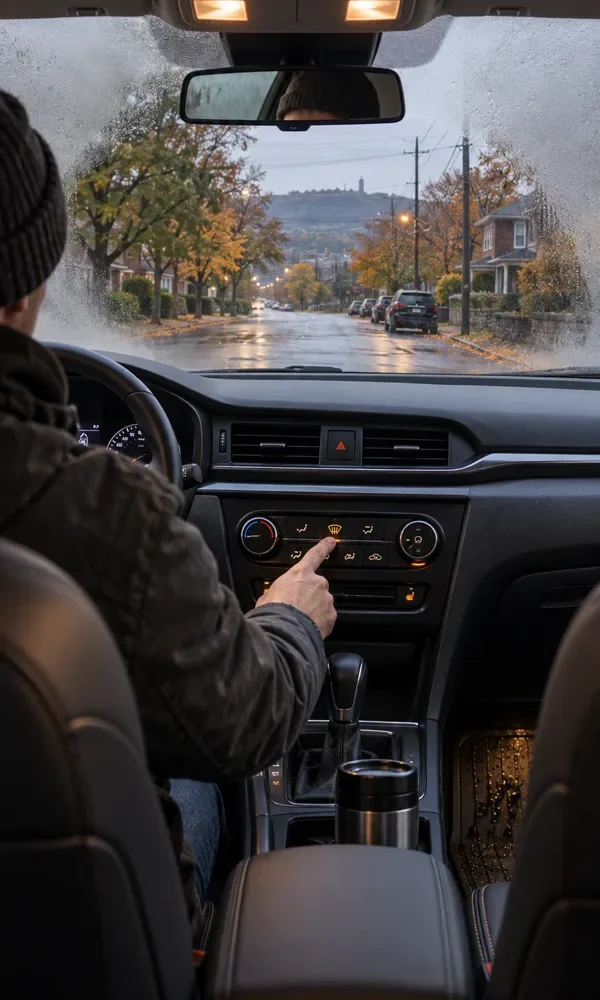
How to Defog a Windshield with A/C, Step by Step
Here is the sequence we teach customers who want their glass clear before they reach the end of the block.
Step 1: Turn On Your A/C
Press the A/C button even in the dead of winter. It feels backwards, but the compressor’s job is to dehumidify, not just to cool. Running it pulls water vapour out of the cabin air before that vapour can settle on the windshield.
Step 2: Set a Warm, Comfortable Temperature
Leave the A/C on, then crank the temperature dial toward the warm side. The system still dries the air, while the heat keeps you comfortable and warms the glass so condensation stops forming. That balance is the trick most drivers miss.
Step 3: Switch Off Recirculation
Recirculation traps the same damp air inside your car, feeding the fog. Turn it off so the system draws in drier outside air. On very cold days, the air coming in holds far less moisture than the humid air you and your passengers are breathing out.
Step 4: Aim the Airflow at the Windshield
Select the defrost setting so the vents blow straight up onto the glass. Add a little airflow from the side vents to reach the front windows too. Within a minute or two, the mist retreats and your view opens up.
Setting Your Car Up for Cold-Season Visibility
Defogging is easier when the whole car is ready for cold weather. As the first frost approaches, we help drivers get ahead of the season with battery testing, fluid checks, and winter tire installation, so nothing catches them off guard on a dark morning.
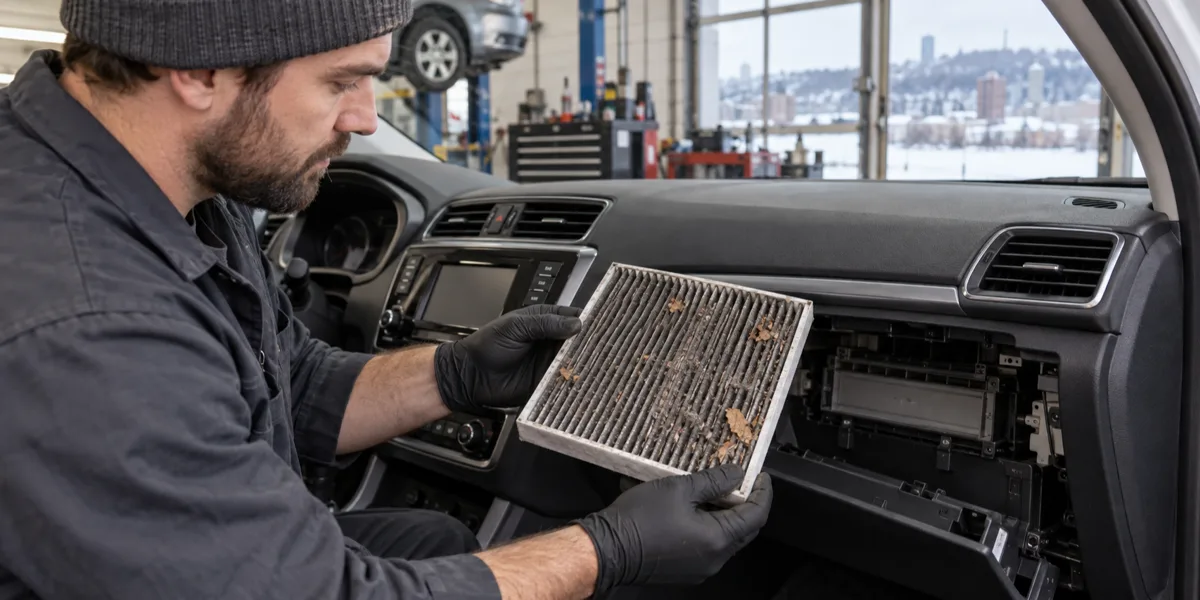
Using your vehicle A/C for winter visibility works best when the cabin air filter is clean. A clogged filter chokes airflow, which slows how quickly the fog clears. It is a small part that makes a big difference, and we check it as part of routine service.
Good visibility also depends on what you cannot see. Worn wipers, low washer fluid, and tired tires all play a role in how safely you move through a wet Hamilton winter. Our team covers this during general car maintenance, and we will tell you exactly what’s needed and why.
Common Mistakes When Clearing Foggy Glass
The biggest error we see is leaving recirculation on. It feels warmer faster, but it recycles humidity and keeps the windshield fogged. Switching to fresh outside air is the opposite of what instinct tells you, yet it works every time.
Another one: wiping the glass by hand. That leaves streaks and skin oils that make future fog cling harder. Let the system do the drying instead of your sleeve.
Some drivers also skip the A/C entirely in winter, assuming it only cools. Left unused for months, seals dry out and refrigerant can slowly escape. Running it briefly through the cold season keeps the whole system healthy and ready when you need it to clear foggy windows while driving.
When to Have Your A/C Checked
If the fog lingers no matter what buttons you press, the system may not be pulling moisture the way it should. Weak airflow, a musty smell, or air that never quite dries points to a deeper issue worth a look.
Our air conditioning service covers a full system inspection, refrigerant recharge, compressor and component work, and leak detection in the refrigerant lines and evaporator. Every job is handled by trained A/C specialists and backed by the NAPA 24-month / 40,000 km warranty.
A defogging problem sometimes travels with other cold-weather wear. While your car is in, it makes sense to pair the visit with brake inspection or a check of your wheels and tires before the roads turn slick.
FAQ
Should I really run the A/C in the middle of winter?
Yes. The compressor removes humidity from the cabin, which is the core reason fog forms. Running it alongside the heater dries the air while keeping you warm. On all makes and models, gas and diesel, a short run through the cold season also keeps the seals lubricated and the refrigerant where it belongs.
Why does turning off recirculation help so much?
Recirculation keeps circulating the damp air you and your passengers exhale, which feeds the fog. Drawing in fresh outside air brings in much drier air, especially on cold Hamilton days. That single switch usually clears the glass faster than any other adjustment you can make from the driver’s seat.
My windshield stays foggy even with the A/C on. What now?
Persistent fog often means weak airflow, a clogged cabin air filter, low refrigerant, or a system leak. If clearing the glass takes far longer than a minute or two, it is worth a professional look. We run a full A/C diagnostic and leak inspection to find the cause instead of guessing.
How long should it take to clear the glass?
With the correct settings, most drivers see the fog lift within one to two minutes. Cold, damp mornings take a little longer because the glass is colder. If it consistently drags on well past that, something in the system is likely underperforming and deserves a checkup.
Conclusion
Clear glass is one of the cheapest safety upgrades you can give yourself, and it starts with knowing how to defog a windshield with A/C: warm air, dry air, fresh air, aimed at the windshield.
Do it right and your view stays open through every cold Hamilton commute. Do it consistently and your A/C stays healthy year round.
If the fog keeps coming back, that is your system asking for attention. Trillium Auto, Hamilton Mountain’s go-to shop since 1987, will inspect it, explain what we find, and get you back on the road with confidence.