Quick Answer
Wondering why brakes overheat in summer? It comes down to heat with nowhere to go. High air temperatures, stop-and-go traffic, and long downhill grades push pad and rotor temperatures past their design limit, so friction fades. Worn pads, tired brake fluid, and sticking calipers make it worse, turning a warm afternoon into soft, unreliable braking.
You press the pedal on a hot day, and something feels off. The stop takes longer. The pedal sinks a little. Maybe there’s an odd smell drifting up from the wheels. That sinking feeling is real, and it usually gets worse before it gets better. At Trillium Auto, your trusted Hamilton mechanic since 1987, we see this pattern climb every June and July. The good news is that overheating brakes are almost always fixable, often with straightforward parts and a proper inspection. Below, we’ll walk through what’s happening under your wheels and exactly how we set it right.
Why Brakes Overheat in Summer: The Real Causes
Braking works by turning motion into heat. Your pads clamp the rotors, friction slows the wheel, and that energy leaves as heat through the metal and surrounding air. In cooler months, the air pulls that heat away quickly. When the pavement is baking and the air itself is hot, the system has a harder time shedding it.
Add Hamilton’s driving reality to that. Crawling traffic on the 403, repeated stops through downtown, and the long descents off the Mountain all force your brakes to work in short, heavy bursts. Heat builds faster than it clears.
Then there’s the hardware. Thin, worn pads run hotter. Brake fluid that has absorbed moisture over the years boils at a lower temperature, which creates a spongy pedal. A caliper that sticks keeps a pad pressed against the rotor even when you lift off, dragging and generating heat the whole time. Any one of these on its own can cause trouble, and summer stacks them together.
Warning Signs You Should Not Ignore
Your car tells you when heat is winning. The clearest signal is a burning smell from brakes after a hard stop or a long hill, often sharp and chemical. That odour means pad material and heat have reached a point they shouldn’t.
A pedal that feels soft or drops toward the floor is another red flag, and it usually points to boiling or contaminated brake fluid. You might also notice the stop growing longer, or the car pulling to one side, which suggests one wheel is doing more work than the rest.
Vibration is worth its own mention. When you feel a steady shudder through the pedal or steering wheel while braking, a rotor has often warped from repeated overheating. That pulsing rarely fixes itself. Left alone, it wears pads unevenly and stresses other parts. Catching these signs early keeps a simple repair from turning into a bigger bill.
How We Fix Overheating Brakes
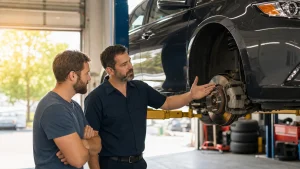
We start with a full brake system inspection, because guessing helps no one. We measure pad thickness, check rotor surfaces and runout, test the fluid, and look for a caliper that isn’t releasing. Only then do we tell you what’s needed and why.
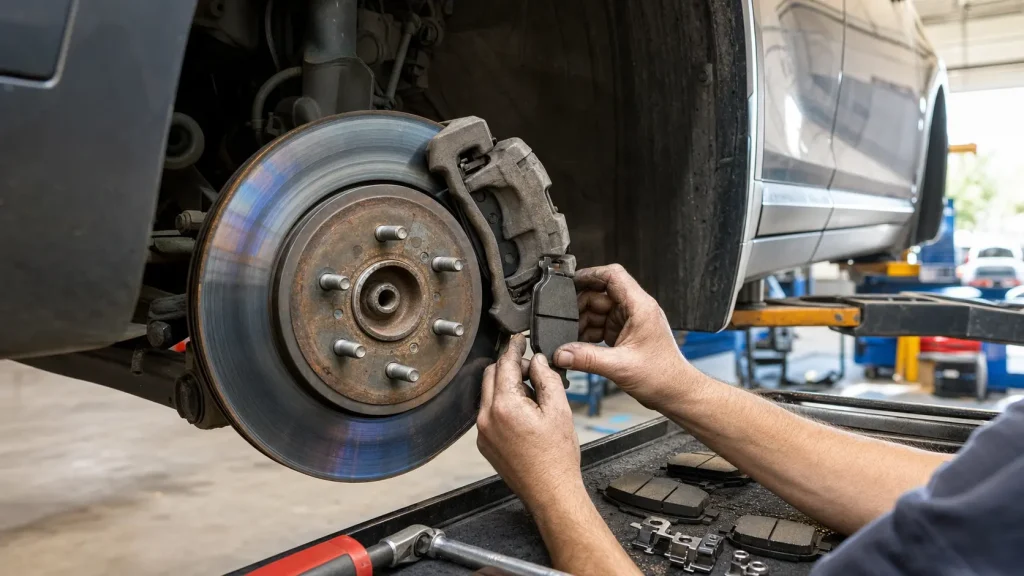
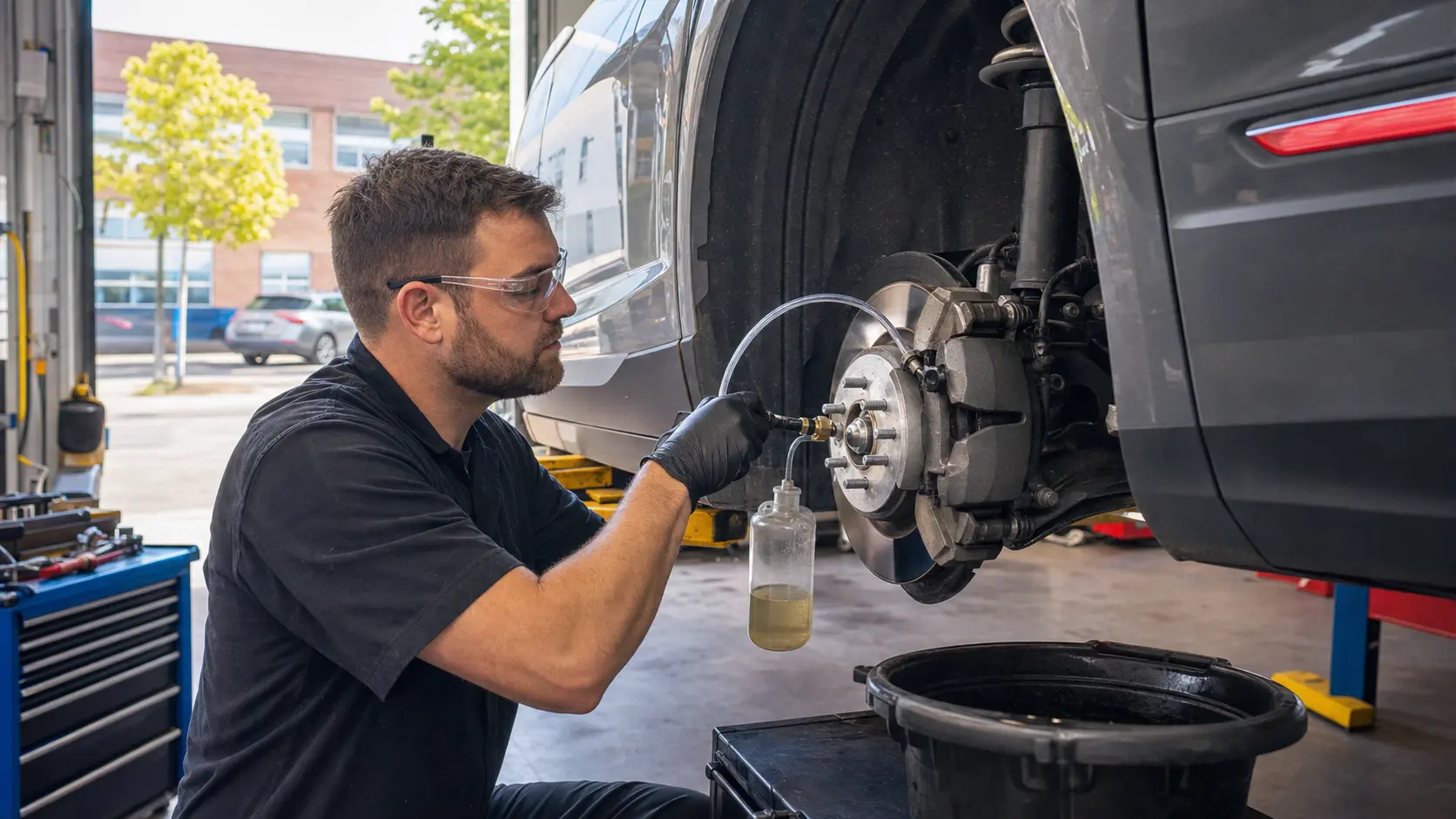
When rotors have heat damage or pulsing, we handle warped rotor repair by machining or replacing them so the surface runs true again. Fresh rotors paired with premium NAPA pads restore even, quiet contact. If the fluid has broken down, a brake fluid flush brings back a firm pedal and raises the boiling point back where it belongs.
A sticking caliper is a common summer culprit, so caliper service for overheating brakes is a core part of what we do. We free or replace the component so it clamps and releases cleanly, which stops the constant drag that cooks a rotor. And because modern cars rely on it, we run ABS diagnostics whenever the warning system points there. Every job is covered by the NAPA 24-month / 40,000 km warranty.
What to Expect at Our Hamilton Shop
Honesty first. We’ll show you the worn part, explain the reading on the gauge, and give you the options in plain language. No pressure, no vague talk. Pricing varies with your vehicle and what the inspection turns up, so we’ll walk you through a clear quote before any work begins.
Most brake jobs are same-day. We service all makes and models, gas and diesel, so whether you drive a compact commuter or a diesel pickup, the process is the same. Book, inspect, approve, repair.
Because summer stresses more than brakes, we often pair the visit with a quick look at related systems. If you’re planning a road trip, it’s smart to combine a brake check with general car maintenance so nothing else surprises you on the highway.
Keeping Summer Brake Trouble Away
Prevention is cheaper than a roadside scare. We recommend a brake inspection at least once a year, and brake maintenance is generally due around every 50,000 km, so heat never gets the chance to compound small problems.
A few driving habits help too. On long descents off the Mountain, downshift and let the engine slow you rather than riding the pedal. Leave more following distance in traffic so you brake gently instead of hard. And don’t ignore that early squeal, since worn pads run hotter and speed up the whole cycle.
Heat also connects your systems together, which is why a struggling cooling setup or an overworked engine can show up right alongside brake fade. If your car feels rough in the heat, our guide on why your engine runs rough in summer heat is a useful companion read. Skipping upkeep rarely saves money, as we explain in the true cost of skipping preventive maintenance.
FAQ
Is it safe to keep driving with a burning smell from my brakes?
No, not until it’s checked. That odour usually means your pads or fluid have overheated, and stopping power fades fast when heat builds. Pull over safely, let the brakes cool, and avoid heavy stops. Then have us inspect the system before you drive far. A quick look often finds a sticking caliper or worn pad, both of which are straightforward to correct before they leave you without brakes on a hot day.
How do I know if my rotor is warped or just worn?
A warped rotor produces a steady pulsing or vibration through the pedal or steering wheel when you brake, especially at highway speed. A worn rotor is usually quieter but too thin to shed heat. We measure thickness and runout to tell the difference, then recommend machining or replacement based on the reading. Either way, we show you the numbers so the decision makes sense to you.
How often should I have my brakes inspected in Hamilton?
We suggest a brake inspection at least once a year, and brake maintenance is generally due around every 50,000 km. Our stop-and-go traffic and the long Mountain descents wear brakes faster than gentle highway driving, so summer is a smart time to check. Catching thin pads or old fluid early keeps a small service from becoming a rotor and caliper job.
Does a brake fluid flush really help with overheating?
Yes, more than most drivers expect. Brake fluid absorbs moisture over time, and moisture lowers its boiling point. On a hot day with heavy braking, that fluid can boil and leave you with a soft, sinking pedal. A flush replaces the old fluid with fresh, dry fluid that resists heat, which restores a firm pedal and steady stopping.
Conclusion
Overheating brakes steal the confidence out of every summer drive, but the fix is rarely a mystery. Once you understand why brakes overheat in summer, the path forward is clear: an honest inspection, fresh pads and true rotors, healthy fluid, and calipers that release the way they should.
At Trillium Auto, Hamilton Mountain’s go-to shop since 1987, we’ll tell you exactly what’s needed and back the work with the NAPA 24-month / 40,000 km warranty.
Book your brake inspection before the next heat wave and drive the summer with full stopping power.